Modern vehicles are no longer just mechanical machines. Today’s cars are powered by software, sensors, electronics, and advanced driver assistance systems (ADAS). Industry experts estimate that premium vehicles can contain more than 100 million lines of software code and over 100 Electronic Control Units (ECUs). As automotive technology becomes more complex, ensuring both quality and safety is a major challenge.
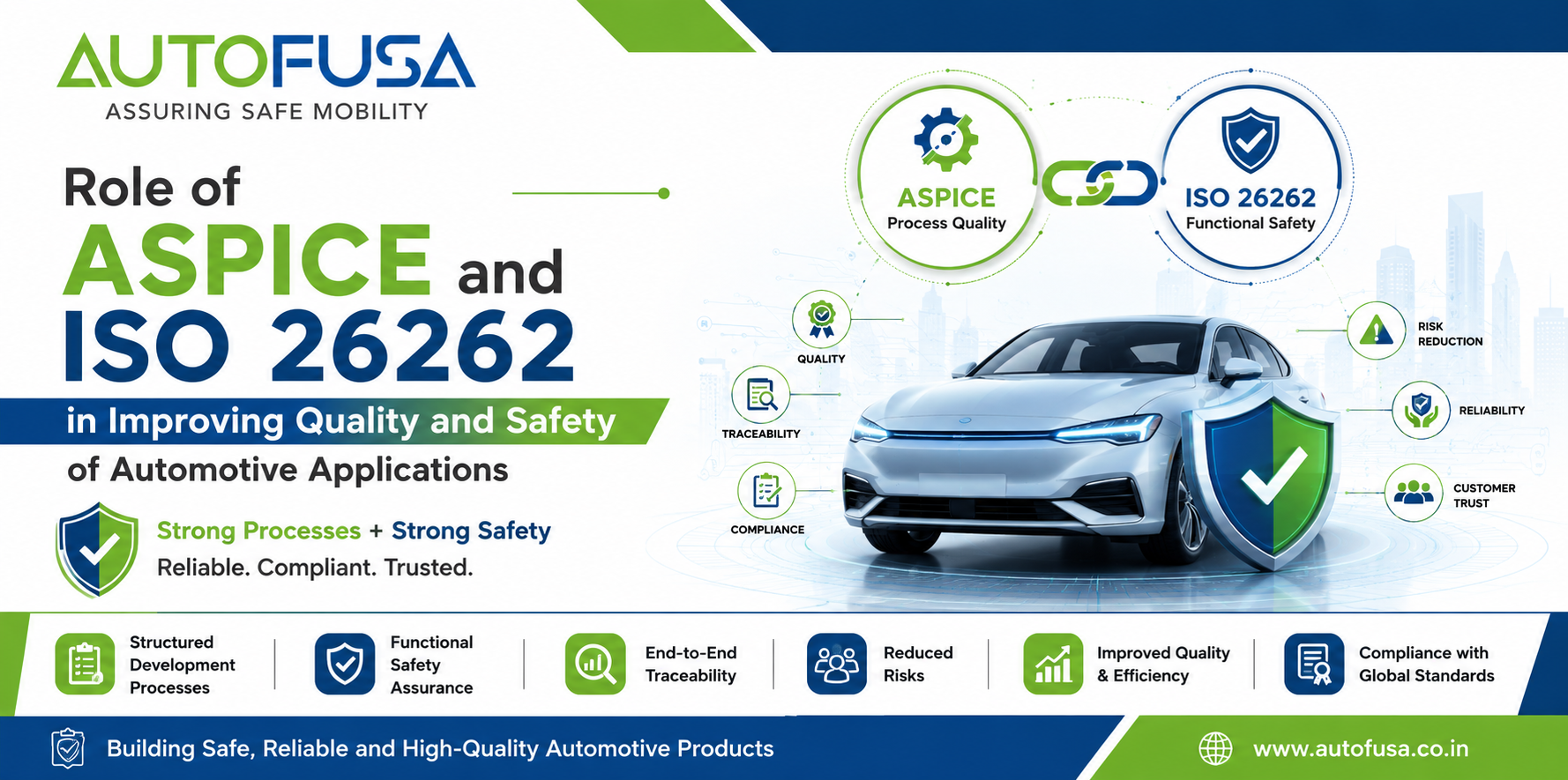
This is where ASPICE and ISO 26262 play a critical role. Together, these frameworks help automotive companies develop reliable, high-quality, and safe products. While ASPICE focuses on improving development processes, ISO 26262 ensures that safety risks are identified and controlled throughout the product lifecycle.
“Quality builds confidence, but safety protects lives.”
By implementing ASPICE and ISO 26262, organizations can reduce defects, improve traceability, and deliver safer automotive systems.
Need Support with ASPICE and ISO 26262?
AutoFuSa helps OEMs, Tier-1 suppliers, Tier-2 suppliers, and semiconductor companies achieve compliance through consulting, training, assessments, and implementation support.
Understanding ASPICE
ASPICE (Automotive Software Process Improvement and Capability Determination) is a framework used to evaluate and improve software development processes.
It helps organizations:
ASPICE follows the V-Model approach where requirements, design, implementation, testing, and validation are connected through structured processes.
Understanding ISO 26262
ISO 26262 is the international standard for functional safety in road vehicles.
The main objective of ISO 26262 is to reduce risks caused by electrical and electronic system failures.
Key concepts include:
Term | Meaning |
HARA | Hazard Analysis and Risk Assessment |
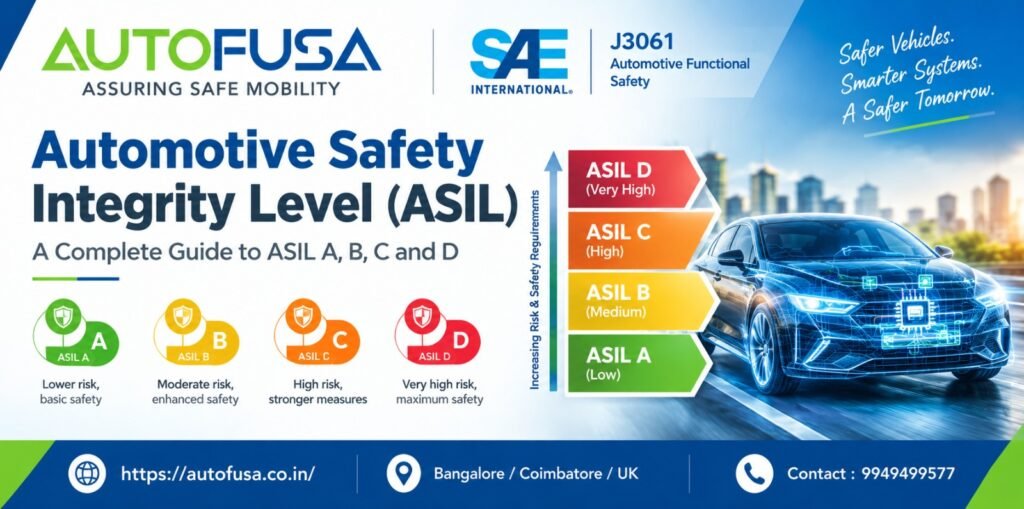
ASIL | Automotive Safety Integrity Level |
FSC | Functional Safety Concept |
TSC | Technical Safety Concept |
V&V | Verification and Validation |
Through ASPICE and ISO 26262, organizations can establish strong development processes while ensuring functional safety.
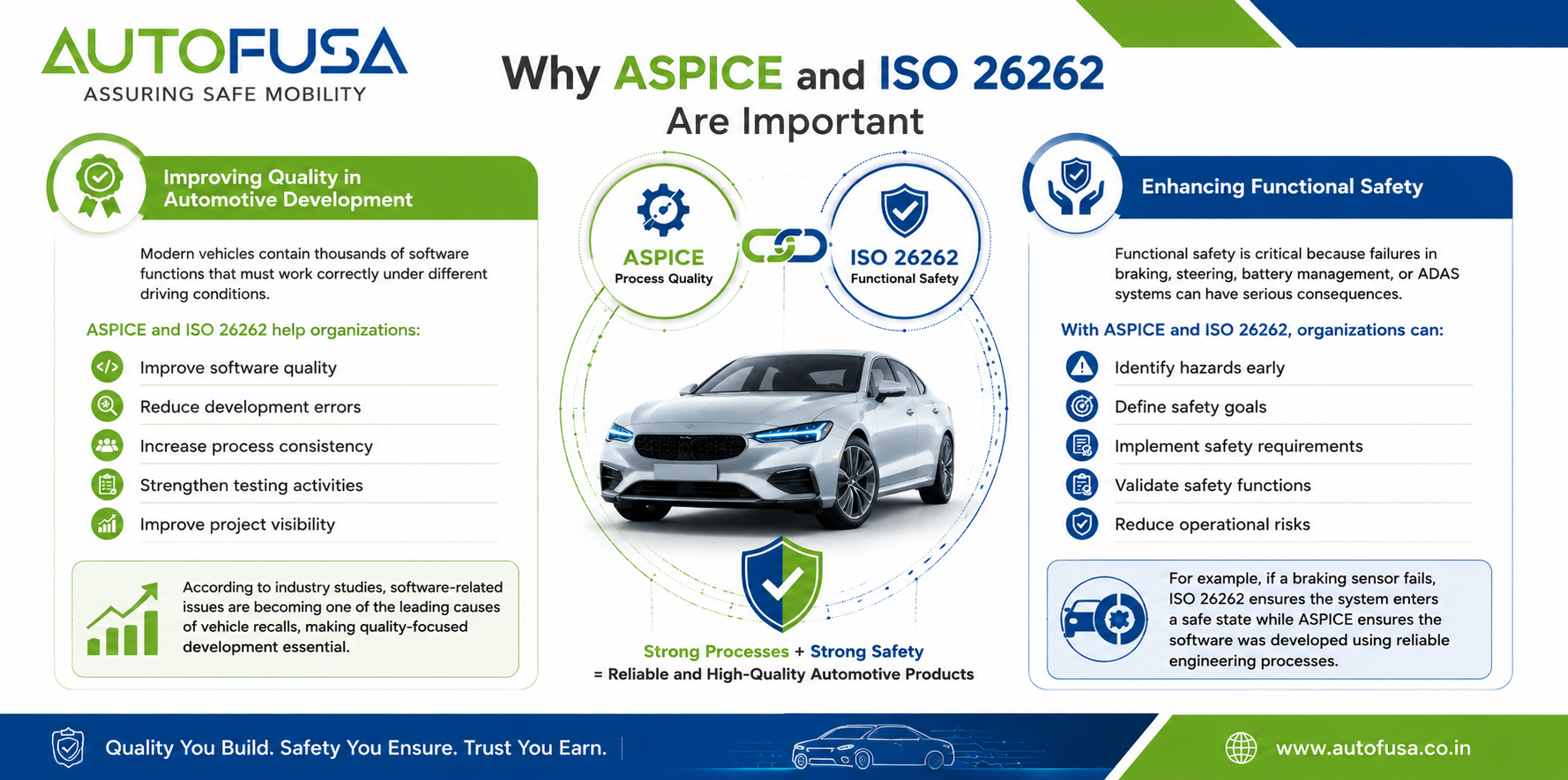
Improving Quality in Automotive Development
Modern vehicles contain thousands of software functions that must work correctly under different driving conditions.
ASPICE and ISO 26262 help organizations:
According to industry studies, software-related issues are becoming one of the leading causes of vehicle recalls, making quality-focused development essential.
Functional safety is critical because failures in braking, steering, battery management, or ADAS systems can have serious consequences.
With ASPICE and ISO 26262, organizations can:
For example, if a braking sensor fails, ISO 26262 ensures the system enters a safe state while ASPICE ensures the software was developed using reliable engineering processes.
ASPICE Focuses on Process Quality
ASPICE improves development quality through:
The goal is to create repeatable and efficient engineering processes.
ISO 26262 focuses on:
Together, ASPICE and ISO 26262 create a strong foundation for building dependable automotive products.
ASPICE | ISO 26262 |
Process Quality | Functional Safety |
Development Efficiency | Risk Reduction |
Better Traceability | Safer Products |
Consistent Engineering | Safety Compliance |
Strong Processes + Strong Safety = Reliable Automotive Applications
Common Challenges in Automotive Development
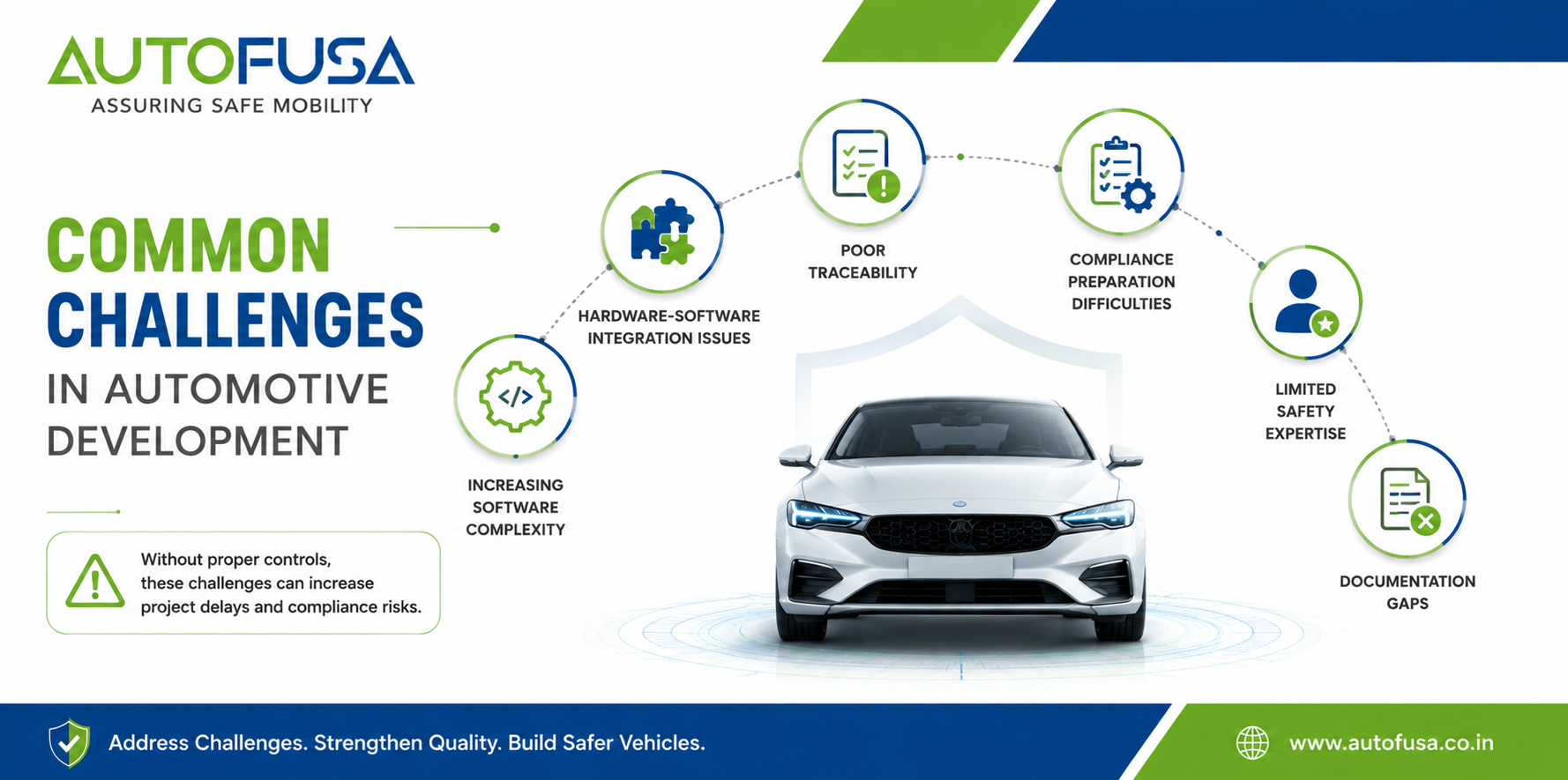
Organizations often face challenges such as:
Without proper controls, these challenges can increase project delays and compliance risks.
To maximize the benefits of ASPICE and ISO 26262, organizations should:
AutoFuSa’s AutoPro Tool helps organizations manage:
Benefits include:
✔ Reduced audit effort
✔ Faster certification readiness
✔ Better project visibility
✔ Improved process efficiency
✔ Stronger compliance management
AutoFuSa provides consulting, assessments, training, and implementation support across the complete automotive lifecycle.
The importance of ASPICE and ISO 26262 continues to grow as the automotive industry evolves.
Emerging trends include:
Future vehicles will require stronger integration between quality, safety, and cybersecurity processes than ever before.
“The future of mobility depends on safe software, reliable systems, and disciplined engineering processes.”
As vehicles become more software-driven, maintaining both quality and safety is essential. ASPICE and ISO 26262 provide a structured framework that helps organizations develop reliable automotive systems while meeting global compliance requirements.
While ASPICE improves development processes and software quality, ISO 26262 ensures functional safety throughout the product lifecycle. Together, they help reduce risks, improve product reliability, and strengthen customer confidence.
Organizations that successfully implement ASPICE and ISO 26262 are better positioned to deliver safe, compliant, and high-quality automotive products in an increasingly competitive market.
Don’t wait until assessments reveal critical gaps.
AutoFuSa helps organizations implement structured processes, improve traceability, and achieve compliance with confidence.
Our Services Include:
What is the difference between ASPICE and ISO 26262?
ASPICE focuses on process quality and software development maturity, while ISO 26262 focuses on functional safety and risk reduction in automotive systems.
Can ASPICE and ISO 26262 be implemented together?
Yes. ASPICE and ISO 26262 complement each other by improving both development quality and product safety.
Why are ASPICE and ISO 26262 important for automotive companies?
They help organizations reduce risks, improve product quality, strengthen compliance, and meet OEM requirements.
How does AutoFuSa help with ASPICE and ISO 26262 compliance?
AutoFuSa provides consulting, assessments, training, audits, gap analysis, and lifecycle support to help organizations achieve compliance efficiently.

Copyright © 2025 Autofusa Made with  by Brand Mindz. All rights reserved.