Whether you’re an OEM, Tier-1 supplier, Tier-2 supplier, or semiconductor company, AutoFuSa helps organizations implement safety processes that meet industry requirements from the beginning.
Contact our Functional Safety Specialists to discuss your project requirements.
Independence Requirements Across ASIL Levels
ISO 26262 requires varying levels of independence depending on the Automotive Safety Integrity Level (ASIL).
ASIL Level | Independence Requirement |
QM / ASIL A / ASIL B | I0 – Review by a different person than the creator |
ASIL C | I2 – Independent reviewer from a different reporting line |
ASIL D | I3 – Reviewer from an external authority or independent organization |
The independence required during a Functional Safety Audit and Assessment ensures objective evaluation and minimizes bias in safety-critical decisions.
Functional Safety Audit and Assessment Process
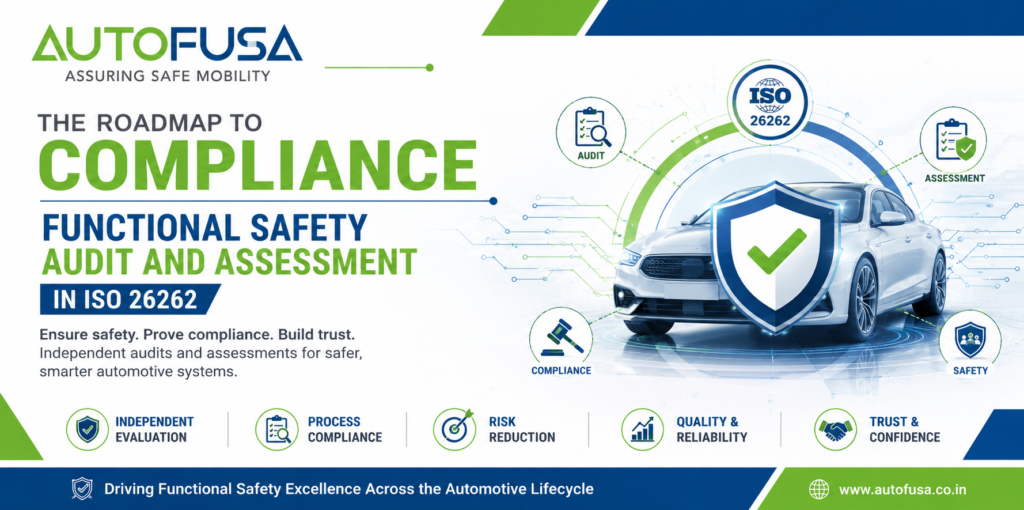
A typical Functional Safety Audit and Assessment follows a structured process:
1. Planning and Scope Definition
Define the audit objectives, applicable standards, project scope, and assessment criteria.
2. Document Review
Review safety plans, requirements, HARA, Functional Safety Concept (FSC), Technical Safety Concept (TSC), verification records, and traceability documents.
3. Interviews and Process Evaluation
Evaluate team understanding, project execution, and compliance with defined procedures.
4. Gap Identification
Identify non-conformities, process weaknesses, missing evidence, and compliance risks.
5. Reporting and Recommendations
Provide findings, observations, corrective actions, and compliance status.
This structured Functional Safety Audit and Assessment process helps organizations identify issues early and improve project readiness.
When Third-Party Assessments Are Required
Third-party assessments are often required for:
- ASIL C and ASIL D projects
- OEM compliance programs
- Certification support activities
- Independent safety evaluations
- Safety-critical automotive applications
An external Functional Safety Audit and Assessment provides an unbiased review and increases stakeholder confidence in the product’s safety claims.
Preparing for an OEM Audit or Certification Assessment?
Independent reviews can reveal critical gaps before they become costly project delays.
AutoFuSa provides independent Functional Safety Audits and Assessments for ASIL A to ASIL D projects.
How AutoFuSa Helps Achieve ISO 26262 Compliance
Common Challenges in Compliance
Organizations frequently face challenges such as:
- Limited understanding of ISO 26262 requirements
- Incomplete safety lifecycle implementation
- Poor documentation practices
- Weak traceability management
- Hardware and software integration issues
- Lack of qualified safety professionals
- Difficulty preparing for external assessments
These challenges can delay projects and increase compliance risks.
Best Practices for Successful Audits and Assessments
Organizations can improve Functional Safety Audit and Assessment outcomes by:
- Establishing clear safety processes
- Maintaining complete traceability
- Performing regular internal reviews
- Training engineering teams
- Using automation tools for compliance management
- Engaging independent assessors
- Continuously improving safety practices
How AutoFuSa Supports Your Compliance Journey
AutoFuSa provides end-to-end support for Functional Safety Audit and Assessment activities across the entire safety lifecycle.
Our services include:
- ISO 26262 process implementation
- Functional Safety Audits
- Functional Safety Assessments
- HARA development
- Functional Safety Concept (FSC)
- Technical Safety Concept (TSC)
- Safety Case development
- Gap Analysis
- Compliance Readiness Reviews
- ASPICE Alignment
- Safety Documentation Support
- Team Training and Mentoring
- Independent Third-Party Assessments
With deep expertise in automotive functional safety, AutoFuSa helps OEMs, Tier-1 suppliers, Tier-2 suppliers, and semiconductor companies accelerate compliance and improve safety confidence.
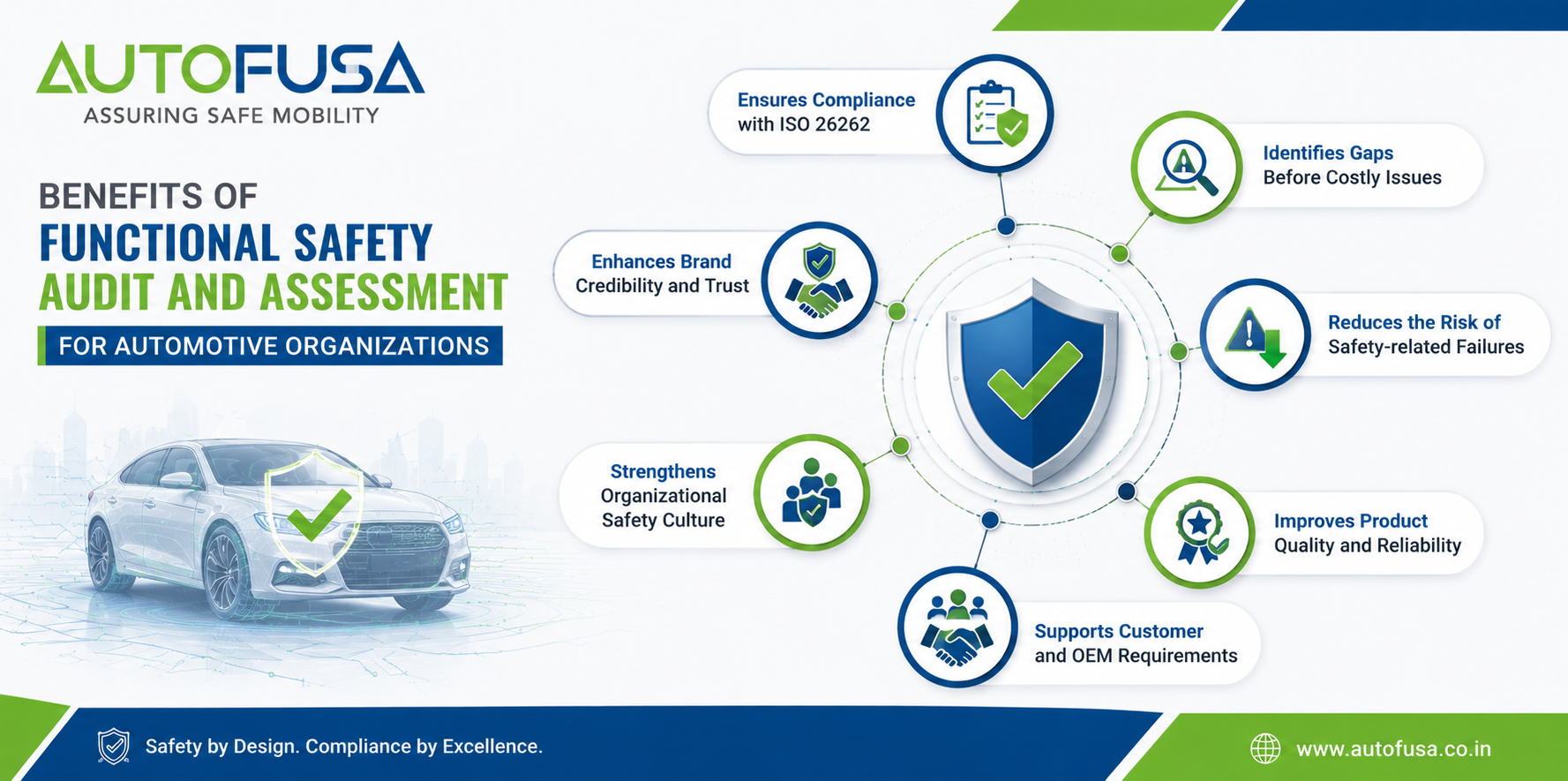
A Functional Safety Audit and Assessment is a critical component of ISO 26262 compliance. These activities provide independent verification that safety processes are implemented correctly and that safety goals have been achieved.
By identifying gaps early, improving traceability, and validating safety evidence, organizations can reduce project risks and deliver safer automotive products.
As automotive systems continue to grow in complexity, a robust Functional Safety Audit and Assessment approach becomes essential for achieving compliance, maintaining customer trust, and ensuring long-term success.
Ready for Your Next ISO 26262 Milestone?
Don’t wait until the final assessment to discover compliance gaps.
AutoFuSa provides expert guidance, independent evaluations, and lifecycle support to help organizations achieve ISO 26262 compliance with confidence.
Our AutoPro Tool streamlines reviews, audits, assessments, and traceability management, enabling teams to stay audit-ready throughout development.
Contact AutoFuSa today and build a safer, more compliant future for your automotive products.

 by Brand Mindz. All rights reserved.